


Industry News, Insider News
Charcoal Wholesale Price Trends: What to Expect in 2025 and Beyond
Keeping a close eye on charcoal wholesale price trends is essential for importers, distributors, and bulk buyers. With constant shifts in global supply chains, transportation costs, and environmental regulations, understanding where prices are heading can make or break your procurement strategy.
In this article, we’ll explore the key drivers behind charcoal pricing, analyze regional market trends, offer predictions for 2025 and beyond, and provide actionable steps for businesses to prepare.
Current Global Charcoal Market Overview
Before diving into price predictions, it’s important to understand the current status of the global charcoal market. This context provides the foundation for identifying where shifts are likely to happen.
To forecast future charcoal wholesale market movements, it’s critical to understand where the market stands today. Charcoal demand is steadily increasing, particularly among restaurant charcoal suppliers and eco-conscious consumers opting for natural alternatives to fossil fuels.
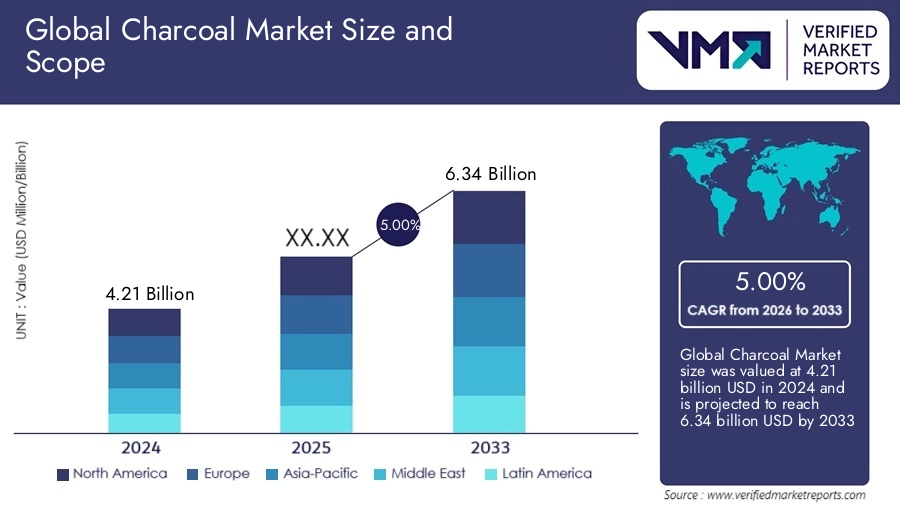
Source: Verified Market Reports
Global consumption is especially high in regions like the Middle East, Africa, and parts of Asia, where charcoal bulk orders support commercial kitchens, food vendors, and home use.
Key Factors Affecting Charcoal Wholesale Prices
Before predicting what lies ahead in 2025, it’s important to understand the underlying forces that shape the current charcoal wholesale landscape. From raw material availability to global demand, several factors can dramatically impact price points.
Raw Material Availability
The supply of essential raw materials—such as hardwood, sawdust, and coconut shells—forms the base of any charcoal manufacturer operation. Any disruption to this supply chain, whether due to weather conditions or policy changes, directly affects the cost.
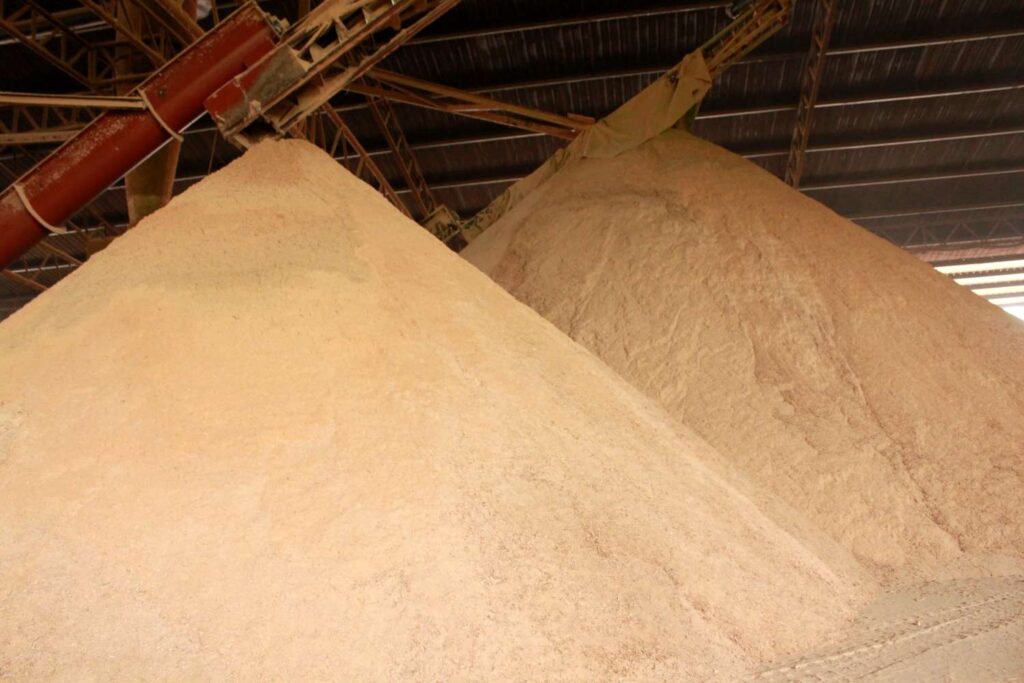
Sawdust for manufacturing Charcoal
Countries like Indonesia and Vietnam are under increasing pressure to enforce stricter forest protection laws. This has resulted in limited access to forest-based resources, pushing charcoal briquettes manufacturers and binchotan charcoal suppliers to either switch materials or source from more distant regions—both options raising costs.
Transportation & Shipping Costs
The surge in container freight rates that began in 2021 has yet to fully stabilize. Even in 2024, charcoal bulk buy contracts are affected by rising shipping fees, delayed customs clearances, and congestion at major ports.
These issues are particularly challenging for charcoal distributor networks in Europe and the Middle East, which depend on consistent shipments from Southeast Asia. When freight becomes unpredictable, so too does the landed cost of goods.
Read more: CIF vs FOB for Charcoal Wholesale Importers: What’s the Better Deal?
Energy & Labor Costs
Production costs at any charcoal factory are highly sensitive to the price of electricity, fuel, and wages. Countries like Vietnam and South Africa are witnessing gradual increases in energy prices and labor standards, which add a layer of cost to each ton of charcoal bulk output.
This also impacts restaurant charcoal suppliers and wholesale briquette suppliers, who must either absorb the costs or pass them on to buyers.
Government Regulations & Sustainability Pressure
Export taxes, emissions controls, and sustainability certifications such as FSC or ISO are now becoming mandatory in many export markets. This shift is prompting many charcoal briquettes manufacturers to invest in cleaner technologies and traceable sourcing.
Buyers are also increasingly seeking partnerships with sustainable charcoal manufacturer networks. This shift is not only a matter of compliance but also brand image, especially in Europe and Japan.
Global Demand from Key Sectors
Demand continues to rise from BBQ restaurant chains, Japanese and Korean dining establishments, and shisha charcoal distributor networks. This growing appetite creates intense competition among charcoal briquettes supplier and local charcoal suppliers, especially during peak seasons.
Additionally, new markets like the Middle East and Africa are expanding rapidly, putting further pressure on charcoal wholesale supply chains. Strategic sourcing and long-term planning are more critical than ever for both charcoal distributor and buyers.
Regional Overview: Price Forecast by Country
As charcoal demand continues to diversify globally, regional pricing trends and supply capabilities are becoming increasingly important for buyers looking to secure favorable deals. This section highlights the forecasted charcoal wholesale price movements across key producing countries and what buyers can expect from each market in 2025.
Vietnam
Vietnam remains a stronghold for charcoal briquettes manufacturers and charcoal distributor networks in Asia. The country is known for stable quality sawdust briquettes, efficient charcoal factory operations, and competitive pricing.
In 2025, Vietnamese charcoal manufacturer exports are expected to increase due to steady global demand and investments in cleaner production methods. Despite modest energy cost increases, Vietnam’s charcoal wholesale price remains attractive, especially for buyers sourcing charcoal bulk quantities.
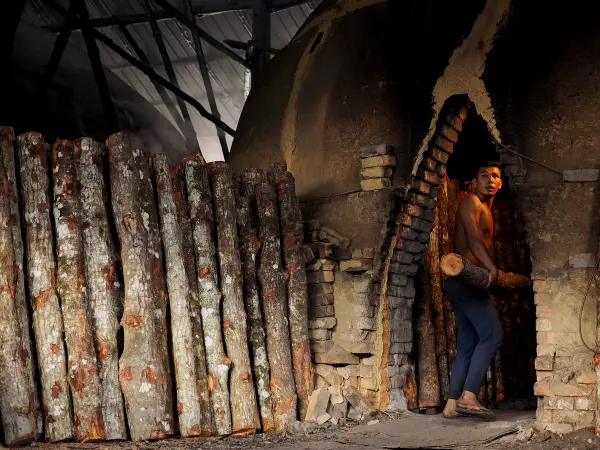
Charcoal Factory In Vietnam
Local charcoal distributors are also upgrading packaging and logistics services, improving lead times and documentation – an edge for international importers.
Indonesia
Indonesia dominates the coconut shell charcoal market and is a major player in premium-grade binchotan charcoal suppliers. The outlook for 2025 is mixed: while supply remains strong, export regulations and domestic competition among charcoal supplier companies may impact pricing.
Climate-related challenges and changes in forestry policies could influence the raw material flow. Still, Indonesia’s position as a reliable charcoal briquettes supplier remains intact, with some price fluctuation expected, particularly in Q2–Q3 due to shipping constraints.
South Africa
South Africa is a leading exporter of hardwood charcoal, primarily to the EU and MEA markets. The wholesale price of charcoal here is heavily influenced by transportation costs, which are projected to remain high in 2025 due to port congestion and fuel surcharges.
Nonetheless, the region’s charcoal bulk output quality and consistency continue to attract charcoal wholesale buyers focused on long-term contracts. Importers are advised to work closely with a reliable charcoal distributor to mitigate shipping risks and delays.
Thailand, India, and Other Regions
Thailand is gaining attention for its high-quality binchotan charcoal suppliers and trusted restaurant charcoal suppliers serving the Japanese–Korean dining sector. Prices are relatively stable due to efficient local logistics and low-cost labor.
India’s role is growing, especially in low-ash briquettes charcoal suppliers targeting the Middle East and North Africa. However, seasonal variability in production and regulatory issues might lead to minor price swings.
Other regions like Malaysia and Sri Lanka are emerging with competitive offers, but limited scale and inconsistent output still make Vietnam and Indonesia the preferred options for charcoal bulk buy strategies.
What to Expect in 2025 and Beyond
As the global charcoal market matures, buyers and distributors are asking: will 2025 bring more stability or new waves of disruption? This section outlines possible market scenarios and shifts in buyer behavior that may define the charcoal wholesale landscape in the coming years.
Price Stabilization or Continued Volatility?
Two possible futures are emerging. In the optimistic scenario, production expands steadily across Vietnam, Indonesia, and South Africa. Freight costs cool down, and stable logistics reduce delays. In this case, charcoal wholesale price trends would level off, benefiting long-term importers.
However, a more volatile outcome remains on the table. Climate-related disruptions such as prolonged dry seasons, export policy shifts, or container shortages could keep charcoal prices fluctuating throughout 2025. Buyers should stay alert to external shocks and secure contracts early.
Premiumization & Value-added Packaging
There is a growing global appetite for high-quality, low-ash charcoal. Importers, especially those supplying to restaurants and retail brands, are prioritizing consistency and presentation over pure cost. As a result, charcoal briquettes suppliers with strong OEM services and branded packaging are gaining ground.
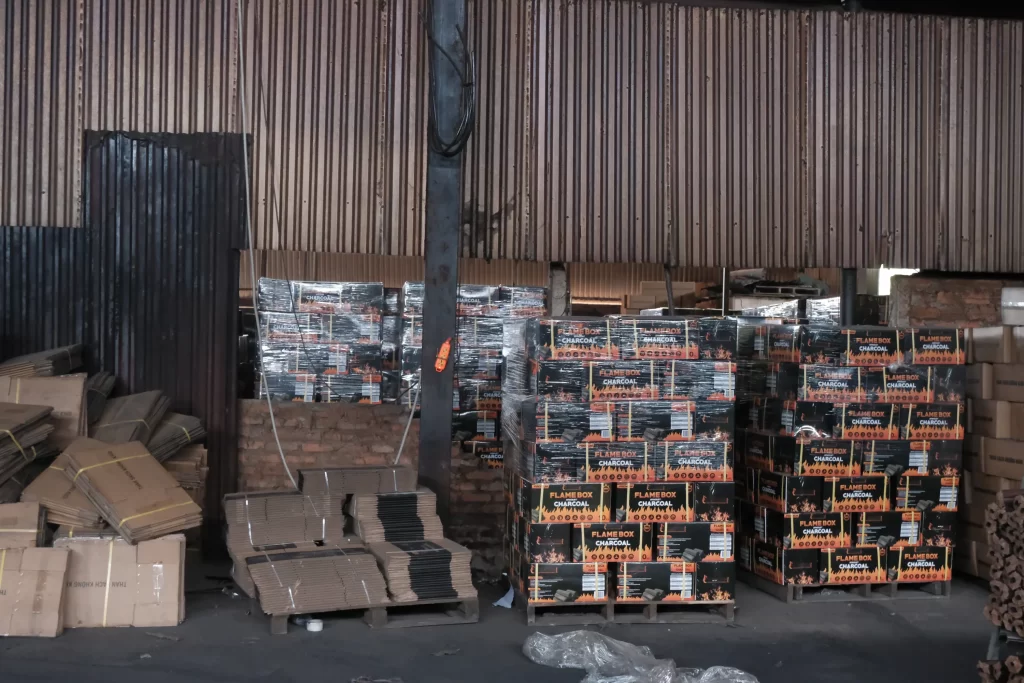
Premiumization & Value-added Packaging
Expect more buyers to request customized packaging, cleaner burns, and certification (such as FSC or ISO) to meet evolving market standards.
Sustainability Premium
Environmental responsibility is no longer optional. Many buyers—especially in the EU and Japan—are willing to pay a premium for sustainably sourced charcoal. Suppliers that can demonstrate eco-friendly production, ethical sourcing, and low emissions will command higher wholesale prices.
This sustainability trend will drive differentiation and reward charcoal manufacturers that invest in cleaner kilns, biomass sources, and carbon-neutral shipping practices.
How to Prepare Your Procurement Strategy
Given the uncertainty and evolution of the charcoal wholesale market, having a smart procurement plan is critical. Here are actionable ways to safeguard supply and cost efficiency.
Work with Transparent & Reliable Charcoal Suppliers
Partnering with local charcoal suppliers or an experienced charcoal distributor who provides clear documentation, responsive communication, and stable production is essential. Look for suppliers with client references, factory visit access, and product testing capabilities.
Whenever possible, establish long-term contracts or diversify sourcing across multiple trusted partners to reduce dependency risks.
Monitor Charcoal Factory Production Cycles
Understanding seasonal output, public holidays, and factory shutdowns in producing countries like Vietnam or Indonesia will help you avoid shipment delays. Top charcoal factories often have yearly maintenance periods or are affected by monsoon seasons.
Being aware of these production cycles enables smarter order timing and better inventory control.
Plan for Flexible MOQ and Logistics
With logistics still prone to price surges and port congestion, working with wholesale briquette suppliers that offer warehousing near ports or flexible minimum order quantities (MOQs) is a huge plus. This allows you to scale orders according to demand or shipment windows.
Strategic stockpiling, booking space early, and even collaborating with freight forwarders who specialize in charcoal cargo can add resilience to your procurement chain.
Conclusion
As we look ahead to 2025, several forces will continue shaping the landscape of charcoal wholesale price trends: limited raw material availability, volatile freight costs, rising production expenses, tightening regulations, and expanding global demand. Staying informed and adaptive is no longer optional—it’s a competitive advantage.
If you’re planning your 2025 charcoal bulk buy, now is the time to talk with trusted charcoal suppliers and lock in your sourcing strategy. Understanding and anticipating changes in charcoal wholesale price could help you avoid costly surprises and strengthen your long-term position in the market.
Read more: 5 Steps to Choose the Right Charcoal Supplier for Long-Term Partnership
