



Industry News, Insider News
From Factory to Port: Logistics for Bulk Charcoal Shipments
In the world of charcoal exports, logistics isn’t just about moving goods—it’s about keeping promises. For distributors, resellers, and importers dealing in charcoal bulk shipments, managing the flow from the production line to the shipping port is what determines delivery time, customer satisfaction, and profit margins. Many delays and unexpected costs come not from the product itself but from poor coordination between the charcoal factory, freight forwarders, and customs.
As demand grows for bulk charcoal briquettes, bulk BBQ charcoal, and sawdust charcoal bulk, knowing how the logistics system works—and what makes a supplier reliable—can make or break your deal. In this article, we explore the full journey: from stacking bags at a sawdust charcoal factory to getting the goods on the vessel, ready to reach your port.
Factory Readiness: What Happens Before Shipping Starts
Before your order even leaves the facility, a dependable charcoal manufacturer ensures that packaging, documentation, and quality control are all handled properly. At a leading charcoal supplier like Tu Charcoal, each order starts with a quality check: moisture content, fixed carbon levels, ash residue, and compression strength of the briquettes.
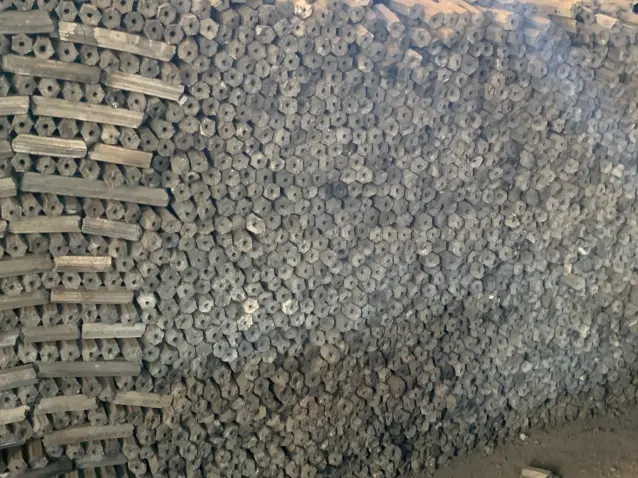
Bulk Sawdust Charcoal Wholesale – Tu Charcoal
Products are then packed according to client specs: 3kg, 5kg, or 10kg bags, jumbo sacks, or even retail-ready cartons for wholesale charcoal briquettes. Whether you’re a charcoal distributor sourcing for supermarkets or a restaurant charcoal supplier with regular clients, packaging matters.
Palletization follows international standards for container optimization important when exporting via 20ft or 40ft containers. This stage also includes labeling and inspection to comply with destination market regulations.
Read more: Inside a Modern Charcoal Factory: From Sawdust to Export-Ready Briquettes
Export Documentation: What You Need for Customs
Documentation is a crucial aspect of international logistics. Professional charcoal bulk suppliers understand that a missing certificate or an inaccurate invoice can delay your shipment and cost you thousands in demurrage or lost sales. That’s why Tu Charcoal ensures meticulous preparation of all required documents, including:
- Commercial Invoice & Packing List: Accurately reflects the goods and quantities for customs valuation.
- Certificate of Origin (C/O): Required to benefit from tax exemptions under trade agreements like EVFTA or CPTPP.
- Fumigation Certificate: Verifies that the goods are pest-free, essential for agricultural product imports.
- SGS or COA (Certificate of Analysis): Proves product quality and compliance with international standards.
- MSDS (Material Safety Data Sheet): Required for handling and safety classification.
These documents are carefully aligned with the destination country’s requirements. As a seasoned sawdust charcoal manufacturer, Tu Charcoal guarantees that both digital and hard copies are prepared, verified, and sent on time to avoid clearance delays.
Shipping Terms: FOB, CIF, or DDP – Which One Is Right for You?
Understanding Incoterms helps buyers choose the most cost-effective and risk-tolerant shipping method. Each option transfers responsibility at different stages:
- FOB (Free on Board): The buyer assumes responsibility once the cargo is loaded onto the vessel. Ideal for experienced charcoal bulk importers who already work with their freight agents.
- CIF (Cost, Insurance, Freight): The seller arranges and pays for shipping and insurance to your destination port. Useful for mid-size charcoal distributors managing moderate-scale logistics.
- DDP (Delivered Duty Paid): The supplier covers everything such as customs clearance, taxes, and final delivery. It’s the perfect solution for new importers or those lacking a dedicated logistics team.
Tu Charcoal, as a flexible charcoal manufacturer, provides all three options depending on the client’s experience and market.
Explore more: CIF vs FOB for Charcoal Wholesale Importers: What’s the Better Deal?
Container Loading & Port Handling
After production and documentation are complete, goods are loaded into containers for transit. The team at Tu Charcoal oversees this process closely:
- Desiccants are added to prevent moisture damage.
- Loads are strapped and shrink-wrapped for safety.
- Container seal numbers are documented for security and traceability.
Photos and videos of the container stuffing process are shared with clients, adding transparency and peace of mind. Lead times range from 12 to 25 days, depending on destination and port capacity.
Freight Forwarders vs Factory-Handled Shipping
You can choose to arrange logistics through your freight forwarder or rely on the charcoal factory to handle it. For many buyers, letting the supplier manage the full chain brings unexpected benefits:
- Full alignment between production, packing, documentation, and dispatch
- One point of accountability in case of issues
- Often lower rates through the supplier’s contracted freight partners
Tu Charcoal regularly manages freight for clients in over 25 countries, offering seamless factory-to-port service. Many reliable charcoal suppliers now handle logistics in-house to reduce client effort and boost delivery consistency.
Read more: Reducing Shipping Costs for Bulk Charcoal Wholesale Orders
Risk Management in Charcoal Logistics
Charcoal logistics involves exposure to various risks, especially when handling international shipping. Top-tier charcoal briquettes manufacturers implement control measures at every step:
- Pre-loading inspection reports: Catch potential issues before dispatch.
- Desiccant placement and ventilation: Prevents moisture and mold during ocean transit.
- Secure labeling and container seals: Avoids tampering and customs suspicion.
- Documentation accuracy: Reduces the chances of port holds or customs fines.
Experienced charcoal suppliers like Tu Charcoal understand the importance of risk mitigation. By applying best practices, we help our partners—whether restaurant charcoal suppliers or large-scale wholesale charcoal suppliers—stay on schedule and budget.
Why Tu Charcoal Excels in Bulk Shipping Logistics
What sets Tu Charcoal apart from other charcoal manufacturers is our end-to-end handling of bulk logistics. We go beyond being just a charcoal factory:
- Integrated export department: From COA to customs brokerage, all in-house.
- Full Incoterm support: We offer FOB, CIF, and DDP shipments depending on buyer preferences.
- Advanced packaging and container loading procedures: Including visual proof for all shipments.
- Global logistics experience: Over 25 countries served with repeat customers across the Middle East, Europe, and Asia.
We’ve become the go-to partner not just for those looking for charcoal bulk products but for importers who want peace of mind. Tu Charcoal is consistently trusted by charcoal distributors, charcoal suppliers, and charcoal briquettes manufacturers to deliver on time, every time.
Conclusion: Ship Smart, Ship On Time
For any distributor or importer, success in the charcoal trade begins with dependable logistics. The difference between a smooth shipment and a lost deal can be as simple as choosing the right charcoal supplier. Skip risky “charcoal suppliers near me” and opt for global-ready partners like Tu Charcoal, a proven sawdust charcoal factory that manages every step from briquette press to port gate.
In the fast-moving world of charcoal wholesale, time is money. Make sure your next container is handled by a charcoal manufacturer that understands your business, your market, and your need for reliability. From bulk BBQ charcoal to wholesale charcoal briquettes, ship with confidence. Tu Charcoal is the charcoal bulk partner you can count on—from factory to port and beyond.
Read more: Where to Buy Charcoal in Bulk for Wholesale Distribution
